If you want to know how to ask a veteran if they're really okay, know this first: the first answer you get is almost never the real one. Ask a veteran how they're doing and you'll hear fine before you finish the question. Good. Can't complain. That answer was ready before you walked into the room, and it gets used on everybody: the cashier, the boss, the spouse, the doctor.
I've spent years talking with veterans on Unfinished Business. I've given that answer, and I've heard it from almost every veteran I know. What follows is what gets past it, including what to do when the answer you finally get is the hard one. You don't need training in veteran mental health or PTSD to do this. You need to know what to say and when to say it.
1. Pick the right moment
Where you ask matters almost as much as what you ask. A lot of veterans talk more easily side by side than face to face: in the truck, on a job site, at the range, out fishing, working on something with their hands. Eye contact across a table can feel like an interrogation. Ask when it's just the two of you and neither of you is in a hurry, and put your phone away where they can see you do it. Skip the middle of a party and the parking lot after a funeral. Nobody can be honest with an audience and a clock running.

2. Ask a question that can't be answered with fine
How are you doing asks someone to sum up their whole life in one breath. Nobody can do that, so they hand you the line they keep in their pocket. Smaller, specific questions are easier to answer truthfully. Try one of these:
“How have you been sleeping?”
“What's been the hardest part of your week?”
“What's been on your mind lately that you haven't said out loud?”
“Who do you call when it gets heavy?”
Sleep is a good place to start. Plenty of veterans will talk about bad nights long before they'll talk about what's keeping them up, and once they're talking, the rest tends to follow. The last question usually gets either a name or a long quiet. Both answers tell you something.
3. Ask twice, then wait
If you still get fine, acknowledge it and ask again:
“I hear you. I'm asking for real, though. How are you actually doing?”
Then stop talking. Count to ten in your head if you have to. That quiet is where the real answer gets decided, and most of us break it in about three seconds with a joke or a change of subject. The first answer costs the person nothing. The second one costs them something, and it only comes if you're still in the chair.
4. Listen more than you talk
Once they start talking, your job gets smaller. Keep your responses short:
“That sounds heavy.”
“Tell me more about that.”
“How long has it been like that?”
Say back what you heard in your own words so they know it landed. You don't need to have answers. Someone who finally says it out loud is usually checking one thing first: whether you can hear it without flinching.

5. What not to say
Some things close the door fast, even when they're meant well.
- Don't say "I know how you feel" unless you've carried the same thing.
- Don't say "At least you made it home." They know. For some veterans, coming home when others didn't is part of what they're carrying.
- Don't ask whether they killed anyone. If that story ever gets told, it gets told on their terms.
- Don't start fixing it with advice in the first five minutes.
- Don't turn it into your own story.
- Don't take fine personally. The habit is older than your friendship.
6. What to do with the answer you get
If they still say fine, drop it for today and tell them, "Okay. I'm going to ask you again next week." Then actually do it. The second conversation is often where the real answer shows up.
If they open up a little, thank them for telling you and ask what would help. Offer one specific thing: a ride, a meal, help with a project on Saturday morning. "Let me know if you need anything" sounds kind, and almost nobody takes you up on it.
If they get angry or shut down, don't argue and don't push. "Fair enough. I'm not going anywhere." You've shown them the door is open, and that counts.
If what they tell you is bigger than a friend can handle, the best way to help a veteran is to get them to people trained for it. Vet Centers offer free, confidential counseling to combat veterans, survivors of military sexual trauma, and their families, with no VA enrollment required, and the Vet Center Call Center at 877-927-8387 is answered around the clock, often by combat veterans themselves. Offer to sit with them while they call, or drive them to the first appointment. Help that comes with a ride is a lot easier to accept.
7. If they mention dying or not wanting to be here
Ask directly: "Are you thinking about killing yourself?" Say it plainly, in those words. According to the National Institute of Mental Health, studies show that asking directly does not increase suicide or suicidal thoughts. Asking it plainly also tells them you can handle the answer.
If the answer is no, believe them for now, keep the conversation going, and give them the Veterans Crisis Line number anyway so they have it. If the answer is yes, or "I don't know," treat it as a yes. Stay with them and call the Veterans Crisis Line together. Dial 988 and press 1, text 838255, or chat online at VeteransCrisisLine.net. Family and friends can call too. If anyone is in immediate danger, call 911.
If there are firearms or stockpiled pills in the house, ask whether they'll let you hold onto them for a while, or store the guns with someone they trust or at a gun shop or range that offers temporary storage. Check your state's rules on transferring firearms first. If they won't hand them over, ask them to lock them up and give you the key. Putting time and distance between a person in crisis and a way to die saves lives.
8. Follow up
One conversation rarely does it. Text them two or three days later:
“Been thinking about what you told me. How's today?”
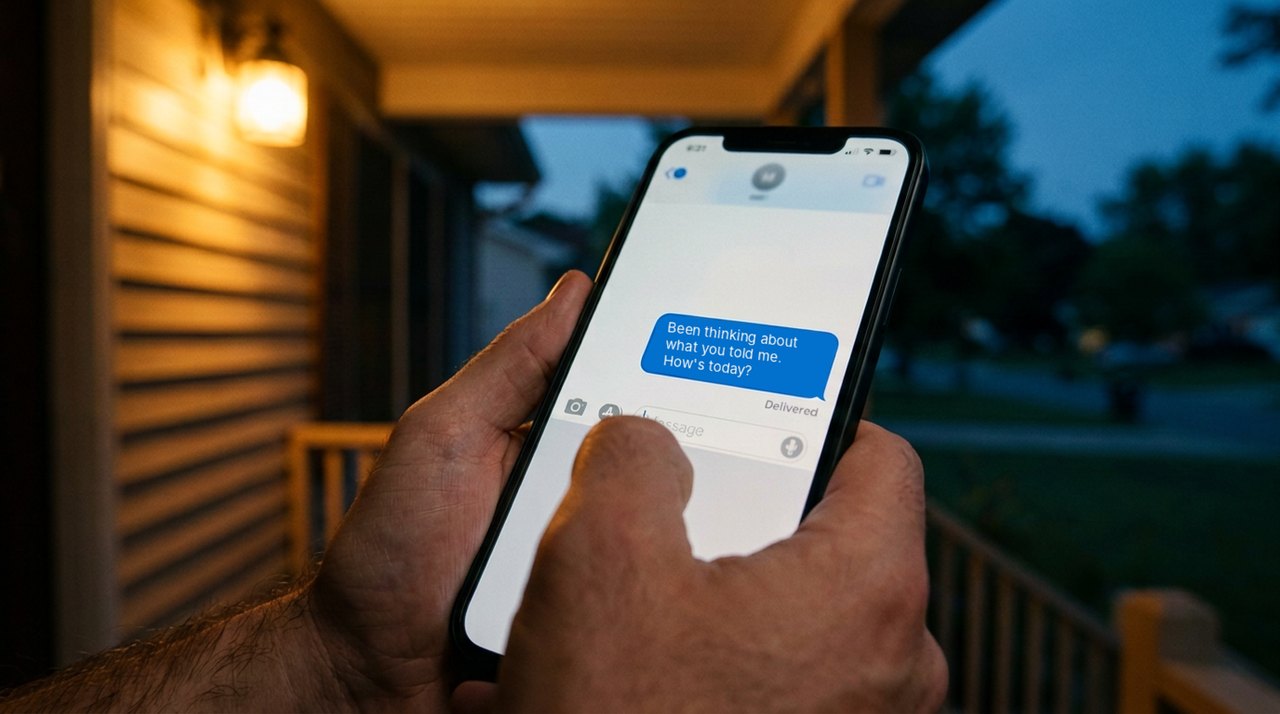
Put a reminder in your phone so it doesn't slide. Ask again next month, even if things seem better. Trust with a veteran gets built by showing up the same way more than once. The people who hear the real answer are usually the ones who kept asking after everybody else took fine and moved on.
I still say fine myself. It comes out before I've decided anything, and I usually notice about half a second too late.
Who is the veteran in your life you've only ever heard say fine, and when will you sit down with them this week?
“The second question is the one that counts.”
More on our work for veterans on the Advocacy page.